
The regulatory backdrop
A registered investment adviser publishing a Substack newsletter is generating written communications that must be retained under Rule 204-2 of the Investment Advisers Act. A registered representative doing the same is producing a retail communication under FINRA Rule 2210. Either way, the obligation follows the content, not the platform.
The challenge
Most archiving vendors focus on messaging apps and leave publishing platforms like Substack outside the archive entirely. If an examiner requests all written communications for a given period, a Substack newsletter from that period is responsive — whether or not it was ever captured.
How Comma closes it
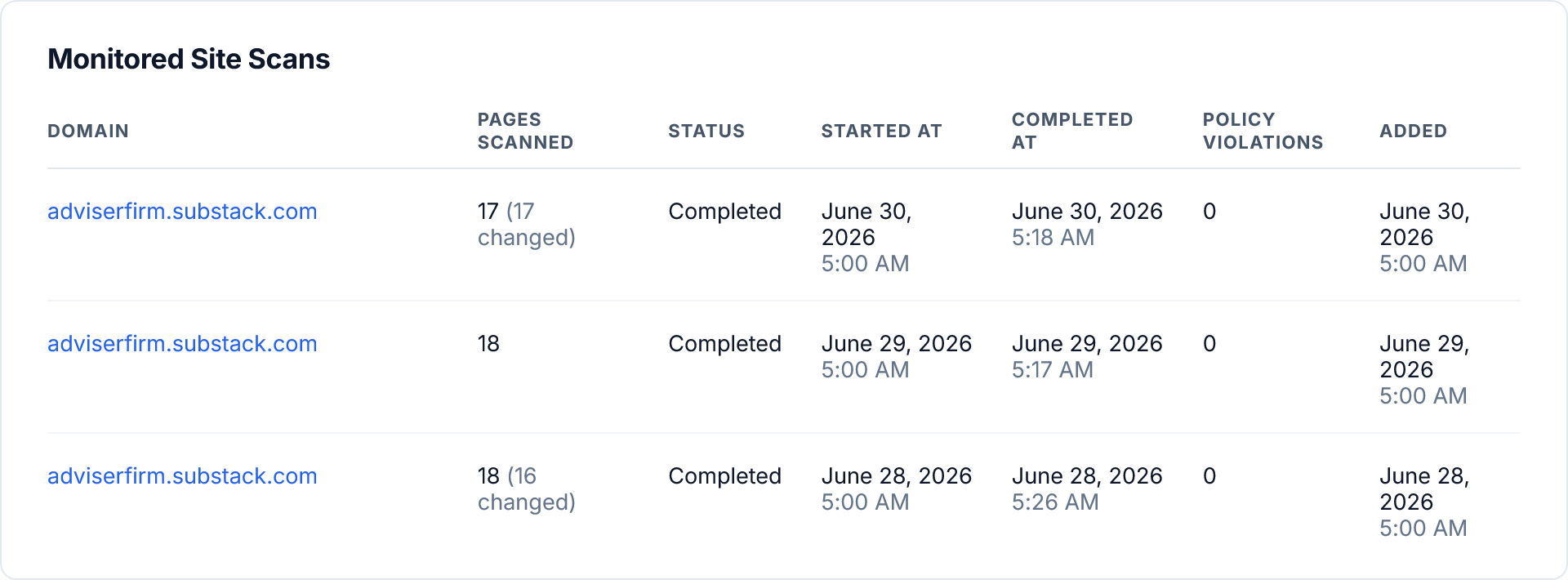
Comma captures Substack newsletters automatically. Text, metadata, and publication date are written to WORM-grade storage in real time. No manual exports. No copy-paste workflows.
What’s captured
Comma captures the full published record: newsletter issues from configured accounts, including content, timestamps, and author metadata. Each issue lands in the same archive and supervision queue as your other 40+ channels.
What this means for every team
For your compliance team
FINRA Rule 2210 coverage
Substack newsletters from registered reps are retail communications. They require principal review prior to publication and must be retained for three years. Comma captures each post automatically, so the record exists from the moment it publishes.
Investment Advisers Act recordkeeping
Rule 204-2 requires investment advisers to retain written communications relating to recommendations, advice, or analyses. A Substack newsletter from an RIA falls squarely into that scope. Comma captures it alongside your other advisory communications.
One supervision queue
Substack posts land in the same review interface as your messaging channels. No separate workflow for monitoring publishing platforms. It's all in one place.
For your IT team
No device or software deployment
Nothing is installed on employee devices and there is no browser extension or agent to manage.
WORM-grade storage
Every captured Substack post is written to the same immutable, tamper-protected WORM archive as your other channels. No Substack-specific storage to maintain.
For your employees
Substack works exactly as it does today
Employees continue writing and publishing normally. Comma captures published content in the background, with no change to the Substack workflow.
No manual exports required
Employees don't save, download, or forward anything. The archive is created automatically when a post publishes.
FAQ about Substack compliance archiving
Why does Substack need to be archived?
What exactly gets captured?
Do employees have to do anything differently?
Does Substack activity go into the same archive as our other channels?
Your newsletters are business records.
Capture them the same way you capture your other channels — automatically, into one tamper-protected archive.
Related reading
- FINRA Rule 2210 — Communications with the PublicWhat FINRA 2210 requires for retail communications, and how it applies to digital publishing platforms like Substack.
- Off-channel communications complianceThe broader recordkeeping obligation that applies any time a registered rep communicates outside approved firm channels.
- All 40+ channels Comma archivesSubstack is one of the 40+ channels Comma captures.